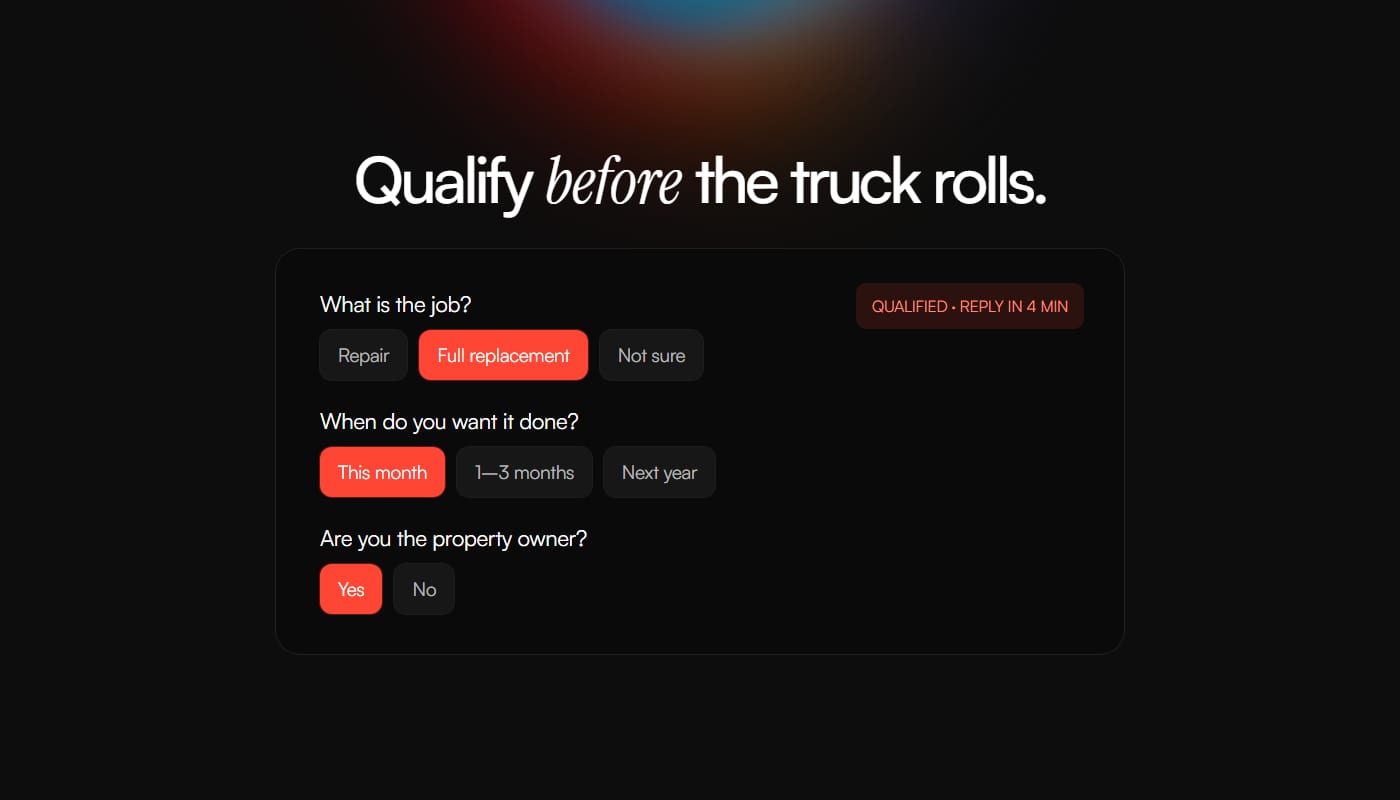
Most "bad" pay-per-lead enquiries are unqualified rather than fake. Three form questions — what is the job, when do you want it done, and are you the owner — plus a first reply within five minutes remove most of the enquiries that were never going to become work, before a truck rolls.
Ask any service business owner who has bought leads what went wrong and you will hear the same story: the phone rang, someone drove out, and the homeowner wanted a price for a job they were thinking about doing next year. Nothing about that lead was fake. It was just never qualified.
Qualification is the part of pay-per-lead nobody sells you, because it costs volume. Every question you add to a form removes people who were only mildly curious — which is exactly the point. On our landscaping account, replacing Meta's one-tap instant form with a custom form cut lead volume and lifted lead-to-close to 29%.
Three questions that do most of the work
- What is the job? A pick-list, not a free-text box. "Repair" and "full replacement" are different customers.
- When do you want it done? "This month" and "sometime next year" should never be priced the same.
- Are you the owner? Tenants and price-checkers self-select out here.
Add a service-area check and you have removed most of the enquiries that were never going to become work — before anyone at your company spends a minute on them.
Speed is a qualification step too
A homeowner comparing roofers fills in three or four forms in the same afternoon. The company that calls back in five minutes gets the inspection; the one that calls back at six o'clock gets "we've already had someone out". Our system treats first contact as part of qualification: every enquiry gets a reply in under five minutes during active hours, with the two or three questions above asked on that first touch.
A lead that sits for hours is a lead that has already talked to a competitor.
What to do with the ones that do not qualify
Do not delete them. "Next year" leads are next year's booked estimates if someone keeps in touch. A short follow-up sequence — a message a week, then a month — costs nothing and turns a chunk of today's unqualified enquiries into tomorrow's easy jobs. That is the difference between buying leads and building a pipeline.
If you want to see what this looks like on a real account, the roofing case study walks through the form, the follow-up, and the calendar it produced.
Common questions
What questions qualify a service business lead?
What is the job (a pick-list, not free text), when do you want it done, and are you the property owner. Add a service-area check and you have filtered out most price-checkers and tenants.
Does a longer form reduce lead volume?
Yes, deliberately. Every qualifying question removes people who were only mildly curious. On our landscaping account a custom form cut volume and lifted lead-to-close to 29%.
What should I do with leads that do not qualify today?
Keep them in a light follow-up sequence. "Next year" enquiries become next year's easy jobs if someone stays in touch; deleting them throws away paid-for pipeline.